Private Label Firestarters: What Buyers Should Know Before Ordering
You have found a firestarter product that looks suitable for your market. Now you want to put your own logo on it and sell it under your brand.
Sounds straightforward, right?
In practice, there are quite a few details to settle before placing a private label order. The product itself is only one part of the project. Packaging, retail presentation, order quantities, artwork and destination-market requirements all need attention.
For importers, wholesalers and retailers, getting these details right at the beginning can save a lot of unnecessary communication later.
Here are seven things to consider before ordering private label firestarters.
1. Decide Which Product You Actually Want to Sell
Before discussing logos and packaging, make sure you have selected the right product.
Firestarters come in different forms, including wood wool firelighters, firestarter cubes and other types of firelighting products. They are not necessarily interchangeable, and each may suit a different sales channel or customer preference.
Think about where the product will be sold.
- Supermarkets and retail stores: Pack size, shelf presentation and product information may be particularly important.
- BBQ and outdoor retailers: Buyers may prefer products positioned for charcoal grills and outdoor cooking.
- Camping stores: Compact packaging and convenient storage may be useful considerations.
- Wholesalers and distributors: Carton quantities, handling and overall purchasing costs may carry more weight.
You should also consider the intended retail price and the amount of product customers expect in one pack.
A good private label project starts with a clear product decision, not just a logo file.
2. Understand What Private Label Customization Includes
Not every private label project involves the same level of customization.
Some buyers simply want an existing product packed under their own brand. Others want to develop a more distinctive retail presentation.
Before requesting a quotation, clarify which elements you want to customize:
Branding: Your company logo, brand name and visual identity.
Retail packaging: Printed boxes, bags, labels or other suitable packaging formats.
Product information: Product descriptions, net weight, piece quantity and other relevant details.
Product specifications: Dimensions, pack weight or other agreed product characteristics, where customization is available.
There is an important distinction here: changing the packaging does not automatically mean the product itself has been customized.
If you are happy with an existing product but want your own branding, say so clearly. If you want changes to the product specifications as well, list those requirements separately.
This makes it easier to understand what can be arranged and what may affect the quotation.
3. Confirm the Minimum Order Quantity Before Developing the Packaging
MOQ is one of the first questions private label buyers should ask.
However, there may not be just one MOQ for an entire project.
The minimum quantity can depend on the product, packaging format, printing requirements and the relevant supplier's arrangements.
For example, an existing product with a simple label may have different ordering requirements from a product requiring newly printed retail boxes.
If you plan to launch several SKUs, ask whether the MOQ applies separately to each product or can be considered across a combined order.
Useful questions include:
- What is the minimum quantity for the selected product?
- Does each packaging design have a separate MOQ?
- Can different product types be included in one order?
- Is there a minimum quantity for custom-printed packaging?
- Are trial orders or smaller initial quantities possible?
Do not assume that all SKUs can share one MOQ. Confirm this before spending time developing multiple designs.
4. Prepare Your Packaging Artwork Carefully
A private label product needs more than an attractive logo.
The packaging must communicate the product clearly and suit the market where it will be sold.
Before submitting artwork, prepare the information that may need to appear on the package:
- Brand name and logo
- Product name
- Net weight or number of pieces
- Product description
- Barcode
- Relevant warnings and safety information
- Required language information
- Business and origin details, where applicable
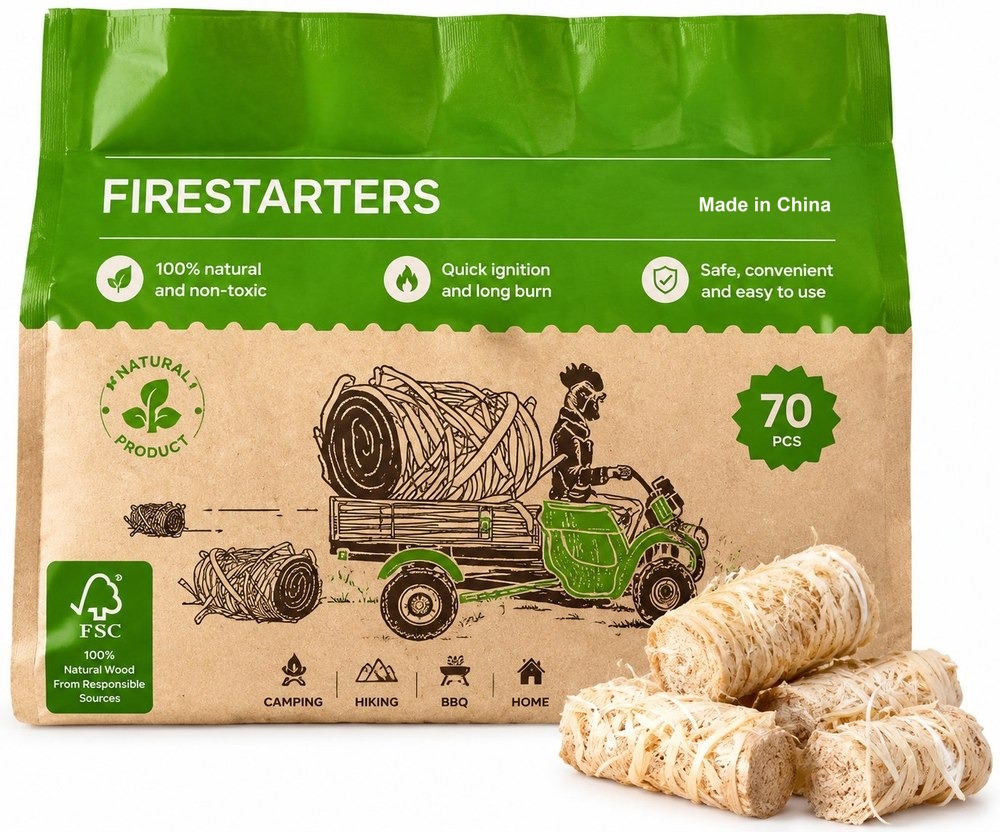
The exact information required depends on the product and destination market. For firelighting products, buyers should pay particular attention to applicable safety, labeling and packaging requirements.
It is also worth checking the physical packaging dimensions before completing the final design. Artwork prepared for the wrong box or bag size may need to be adjusted.
One practical tip: keep a clearly named final artwork file and obtain written approval before printing. If the design is revised, make sure everyone is working from the same version.
5. Request a Sample Before Confirming the Full Order
A private label project should not move directly from a product photograph to a large commercial order.
There are two different things to evaluate:
The product sample
Check the product's appearance, dimensions, material, pack quantity and relevant performance requirements.
The packaging sample or proof
Check the logo, colors, text, barcode, layout, material and overall presentation.
Depending on the packaging arrangement, you may receive a digital artwork proof, a printed sample or a physical packaged sample.
These are not necessarily the same thing. A digital proof can help you check the layout, but it does not always show the final printed color or physical packaging quality.
For a new retail brand, it is worth being clear about exactly what has been approved before moving forward.
6. Compare the Full Cost, Not Just the Product Price
Private label pricing involves more than the cost of the firestarters themselves.
Depending on the project, buyers may need to consider:
- Product unit price
- Retail packaging cost
- Printing or labeling charges
- Artwork or setup costs, if applicable
- Master carton costs
- Order quantity
- Shipping terms and transportation costs
Ask for the quotation to separate these items wherever possible.
This is especially useful when comparing different packaging options. A printed box, a simple bag and a shrink-wrapped pack may have very different costs.
Also ask whether any one-time charges apply to the first order and whether they will be repeated for future orders.
That way, you can estimate both the initial investment and the cost of reordering.
7. Clarify Who Handles Each Part of the Project
This point is particularly important when working with an overseas trading company or sourcing partner.
A private label order may involve several parties: the buyer, product supplier, packaging supplier and logistics provider.
Before confirming the order, make sure responsibilities are clear.
For example:
| Project Detail | What Should Be Confirmed |
|---|---|
| Product selection | Who provides the product information and specifications? |
| Sampling | Who coordinates product samples? |
| Artwork | Who checks and communicates packaging requirements? |
| Production | Which supplier is responsible for supplying the product? |
| Quality follow-up | How are agreed specifications communicated and checked? |
| Shipment | Who coordinates packing details and export arrangements? |
You should also ask how product changes, artwork revisions and order updates will be communicated.
A trading company can help coordinate these steps between buyers and relevant suppliers, but its actual responsibilities should be explained clearly.
A Private Label Firestarter Checklist Before Ordering
Before moving ahead with your project, make sure you have considered the following:
- Selected the product type and intended application
- Confirmed the product specifications
- Decided which elements need private label customization
- Checked the MOQ for each product and packaging option
- Prepared the logo and packaging artwork
- Confirmed labeling requirements for the target market
- Reviewed product and packaging samples
- Compared the complete quotation
- Clarified order coordination and shipment responsibilities
Start with a Clear Brief, Not Just a Logo
A successful private label firestarter project does not begin with printing a brand name on a package. It begins with understanding the product, the target customer and the requirements of the market.
The more clearly you define these details, the easier it becomes to compare sourcing options and avoid unnecessary changes after an order has been confirmed.
At Wild Igniter, we work with international buyers on outdoor ignition product sourcing, product selection, supplier communication, packaging coordination and export order follow-up.
Whether you are launching a new private label range or looking to add firestarters to an existing product line, we welcome the opportunity to discuss your requirements.
Send us your preferred product type, target market and packaging ideas. We can start by discussing the available sourcing options for your project.
Your brand deserves a product and packaging plan that makes sense from the beginning.